
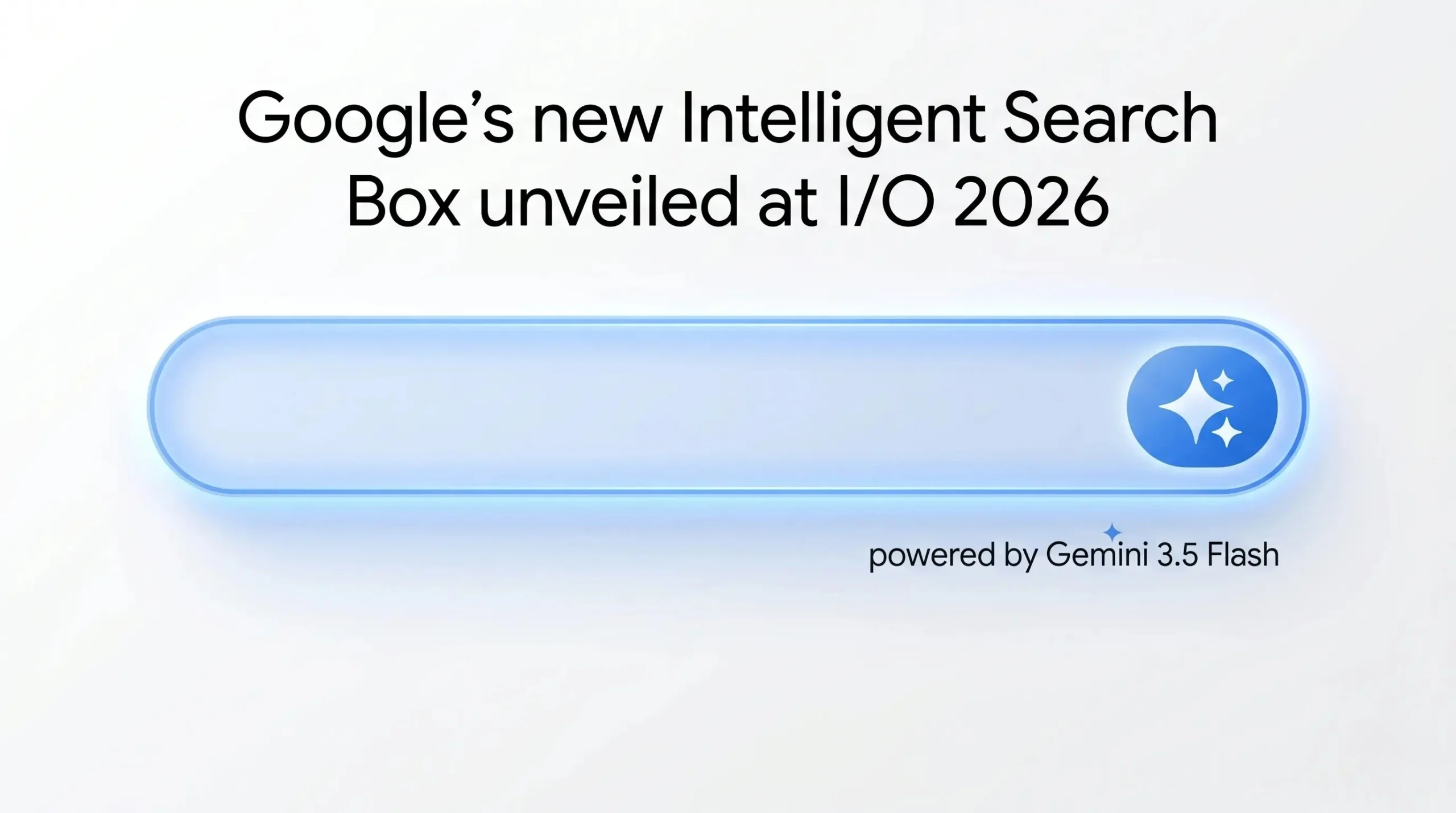
Google Just Rebuilt Search From the Ground Up
Google's Biggest Search Change in 25 Years
The May 2026 core update is live. The Intelligent Search Box launched at Google I/O. Information agents are coming. This is not a refinement. It is a rebuild.
If you run a website, advise clients on search, or simply care about how people find content online, the week of May 19 to 21, 2026 demands your full attention. In the space of three days, Google announced the most significant redesign of its search interface in over 25 years at Google I/O 2026, then immediately followed it with its second broad core algorithm update of the year.
These are not separate news items. They are two components of the same strategic move: Google is rebuilding search around AI, and it is moving fast.
The May 2026 Core Update: What Google Actually Said
Google confirmed the rollout on May 21, 2026 via its Search Status Dashboard and posted on LinkedIn the same day. The official language was measured: this is a regular update designed to better surface relevant, satisfying content for searchers from all types of sites, with the rollout expected to take up to two weeks to complete.
Core updates are broad recalibrations of how Google's ranking systems evaluate content quality across the entire web. They are not targeted fixes. When one rolls out, entire sectors can shift in days, and the volatility often continues for the full duration of the rollout window.
That qualifier matters: "as long as." Google has been consistent for years. Content built around genuine helpfulness, real expertise, and user intent holds up across core updates. Content built around keyword patterns and thin answers does not. This update continues that trajectory at increased scale.
Timeline of Recent Core Updates
Google I/O 2026: The Intelligent Search Box and What It Actually Does
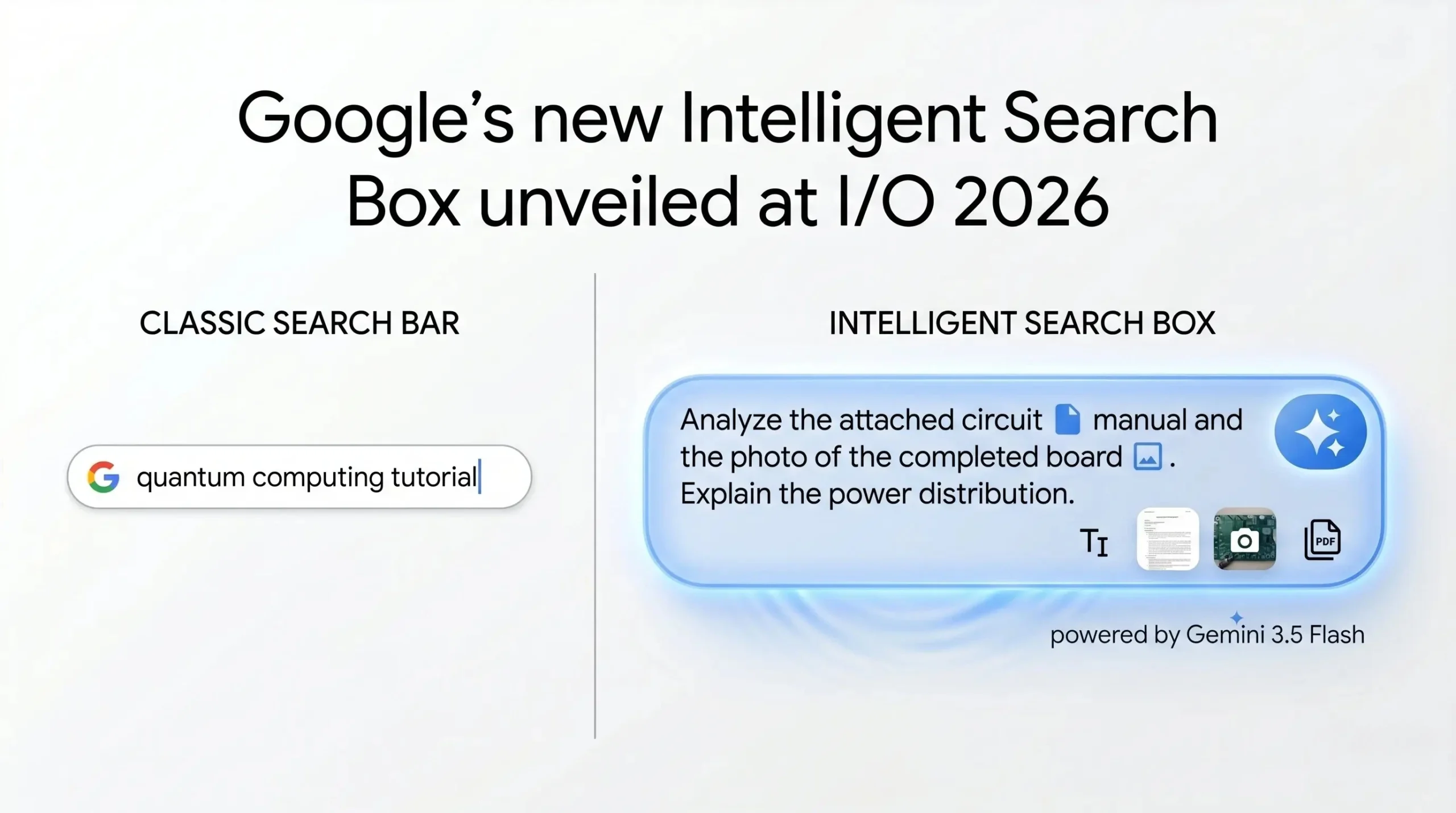
At Google I/O 2026 on May 19 and 20, Google unveiled what Liz Reid, Google's Head of Search, called the biggest upgrade to the Search box in over 25 years. The announcement came alongside updated usage numbers that put the scale of this shift into sharp context.
The new Intelligent Search Box began rolling out on May 20 in all countries and languages where AI Mode is available. It is powered entirely by Gemini 3.5 Flash, which Google also announced as the default model in AI Mode globally at the same keynote.
What Is New in the Intelligent Search Box
Google CEO Sundar Pichai framed the direction at I/O clearly: search is evolving from individual queries to ongoing conversations, and now to agentic workflows. The Intelligent Search Box is the front door to that future.
Why Both Events Together Matter More Than Either Alone
The May 2026 core update and the Intelligent Search Box are not coincidental. They are coordinated. The core update recalibrates which content Google considers worth surfacing in its ranking systems. The Intelligent Search Box changes how users interact with those results and, increasingly, how they get answers without clicking through to any result at all.
Content built to rank on keyword patterns is being squeezed from both sides at once. The algorithm gives it less visibility. The interface absorbs the queries it was designed for before a user ever reaches page one.
Conversely, content with genuine depth, earned authority, real-world experience, and specific expertise is now more valuable than at any point in the past decade. The AI systems surfacing answers in AI Overviews and AI Mode need sources to draw from. High-quality, trustworthy content becomes the raw material for those AI-generated responses, not just a destination link.
What You Should Do Right Now
If Your Rankings or Traffic Have Dropped
- Identify which pages dropped and ask honestly whether they fully satisfy the user's intent, not just the surface-level keyword they ranked for.
- Review Google's helpful content guidance and apply those questions as a genuine editorial audit, not a compliance checklist.
- Avoid wholesale panicked rewrites. Sustained, purposeful improvement outperforms reactive changes every time.
- Wait for the rollout to complete (up to two weeks) before drawing firm conclusions from your Search Console data.
- Check Google's Search Status Dashboard regularly during the rollout window. Volatility during active updates is normal and expected.
Adapting to the Intelligent Search Box Era
- Map your content against query types. Informational queries answerable in one sentence are your highest-risk traffic sources. Plan now for how to evolve or replace that content.
- Invest in content that requires nuance, first-hand experience, original research, or proprietary data. These are things AI cannot generate from thin air and must cite from real sources.
- Think about GEO (Generative Engine Optimisation). Being cited inside an AI Overview or AI Mode response is the new version of ranking on page one. Structure your content to be citable, not just crawlable.
- Diversify your audience acquisition. Email lists, communities, and social channels become more valuable as search click-through rates compress on informational queries.
- Start monitoring your brand's presence inside AI-generated answers, not just your keyword rankings. Tools for this are still emerging but the signal matters now.
The Bigger Picture: Search Is Becoming an Agent
Sundar Pichai's framing at I/O 2026 was deliberate and precise. Search is evolving from individual queries to ongoing conversations and now to agentic workflows. The information agents announced at I/O are the first concrete expression of that third stage. Background AI that monitors topics, synthesises web changes, and delivers summaries directly to users represents a fundamentally different relationship between a user and the open web.
The Intelligent Search Box is not the end state. It is a visible onramp. Every quarter, as AI Mode query volume doubles and AI Overviews reach more users, the interface between a person and the websites they might visit gets more mediated by AI. The businesses and content creators who will hold their ground are those building genuine authority: content that AI systems want to cite, brands that users actively seek out, and experiences worth visiting even when part of the answer is already available inline.