
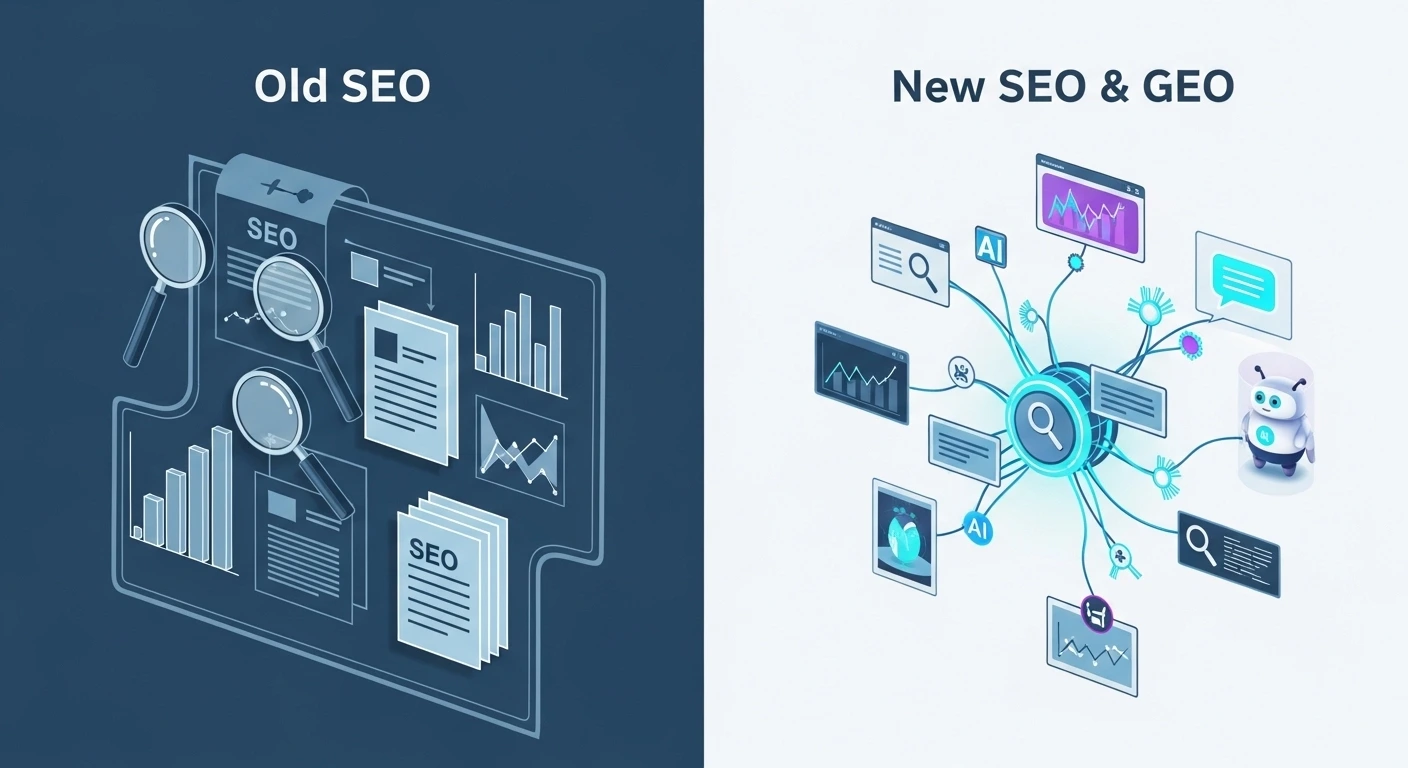
SEO Update March 2026: Old SEO vs New SEO and GEO
Google’s March 2026 Core Update marks a pivotal shift in search optimization. Traditional SEO tactics now compete with Generative Engine Optimization (GEO) as AI-driven answers dominate user queries.
Core Update Highlights
The March 2026 update emphasizes E-E-A-T (Experience, Expertise, Authoritativeness, Trustworthiness) more than ever. Rankings favor content with proven first-hand experience over generic AI-generated text.
Google cracked down on low-quality content hosted on high-authority sites, known as parasite SEO. Interaction to Next Paint (INP) thresholds dropped to 150ms, punishing slow-loading pages.
Organic traffic for informational queries fell 47% for outdated strategies, while brands excelling in AI citations saw 340% gains in branded searches.
Old SEO Tactics
Old SEO relied on exact-match keywords stuffed into short content. Success measured rankings for single terms via backlinks and volume.
Evergreen pages ranked for years with minimal updates. Focus stayed on SERP positions, not user engagement or AI extraction.
This approach worked pre-2025 but ignores modern AI Overviews and zero-click searches.
New SEO Priorities
New SEO targets topics and user intent over isolated keywords. Content must deliver in-depth, clear answers with structured data like tables and lists.
Core Web Vitals, including the stricter INP, drive rankings alongside E-E-A-T signals. Update content quarterly to signal freshness.
Measure success by visibility, clicks, engagement, and brand presence across platforms.
| Aspect | Old SEO Approach | New SEO in 2026 |
|---|---|---|
| Focus | Exact keywords | Topics and intent |
| Content Style | Short, repeated phrases | In-depth answers |
| Metrics | Single keyword rank | Engagement and presence |
| Freshness | Evergreen okay | Quarterly updates |
| Tech Signals | Backlinks primary | Core Web Vitals key |
GEO Explained
GEO optimizes for AI engines like ChatGPT, Perplexity, and Gemini, prioritizing citations over traffic. Users get answers without clicking through, so influence happens in AI responses.
Unlike SEO’s long-form focus, GEO demands answer-first structures: comparison tables, numbered lists, entities, and schemas. Freshness and accuracy are non-negotiable; stale data gets ignored.
GEO builds authority via semantic clarity and trust signals AI models extract easily.
SEO vs GEO Breakdown
SEO drives website traffic through Google rankings. GEO secures brand mentions in generative answers, even without site visits.
Both value high-quality content and E-E-A-T, but GEO stresses structured, extractable data over comprehensive pages.
| Dimension | SEO | GEO |
|---|---|---|
| Goal | Traffic and rankings | AI citations and influence |
| Content | Long-form depth | Structured snippets |
| Metrics | Clicks and sessions | Mentions and quotes |
| Update Cadence | Annual refreshes | Quarterly or faster |
| Platforms | Google SERPs | ChatGPT, Perplexity |
SXO Integration
Search Experience Optimization (SXO) bridges SEO and GEO by prioritizing user satisfaction from query to conversion. It combines technical speed, intuitive navigation, and personalized content.
In 2026, SXO ensures AI-cited content leads to high engagement on your site. Use author bios, real case studies, and fast INP to boost dwell time.
Actionable 2026 Strategy
Audit top pages for E-E-A-T gaps and add experience proof like case studies. Restructure with tables, lists, and update dates for GEO compatibility.
Test INP below 150ms and refresh stats for March 2026 relevance. Track AI citations alongside rankings for hybrid wins.
Brands layering SEO, GEO, and SXO own both traffic and influence this year.
Frequently Asked Questions
Google’s Core Update prioritized E-E-A-T and cracked down on low-quality content. It introduced stricter Core Web Vitals like 150ms INP, favoring fresh, experience-backed content over keyword stuffing.
SEO targets Google traffic via rankings; GEO optimizes for AI engines like ChatGPT for citations in answers. GEO uses structured lists and tables for easy extraction, while SEO focuses on long-form pages.
SXO enhances user satisfaction from search to conversion with fast sites and intuitive design. It boosts engagement on AI-cited content, bridging traffic from SEO and influence from GEO.